The closing scene of the film “A Beautiful Day in the Neighborhood” about the children’s television presenter Mr Rogers (played by Tom Hanks) felt poignant to me, though I’m not sure how many would even recall it. The story begins when investigative journalist Lloyd Vogel, who’s developed a reputation for maligning interview subjects, is relegated to writing a fluff piece about a guy who “plays with puppets for a living.” Resentment turns into curiosity as Lloyd spends time talking with the kind, respectful, and refreshingly unveiled Mr Rogers. At one point, though, Lloyd just doesn’t buy it. Nobody can be that nice all the time– as if Mr Rogers purported to never have worries or anger or sadness. As Vogel presses hard with questions about the burdens of life as a public figure, Mr Rogers reminds him, “There is no normal life that is free from pain.” Vogel then earnestly asks the question on behalf of us all: “How do you deal with that?”
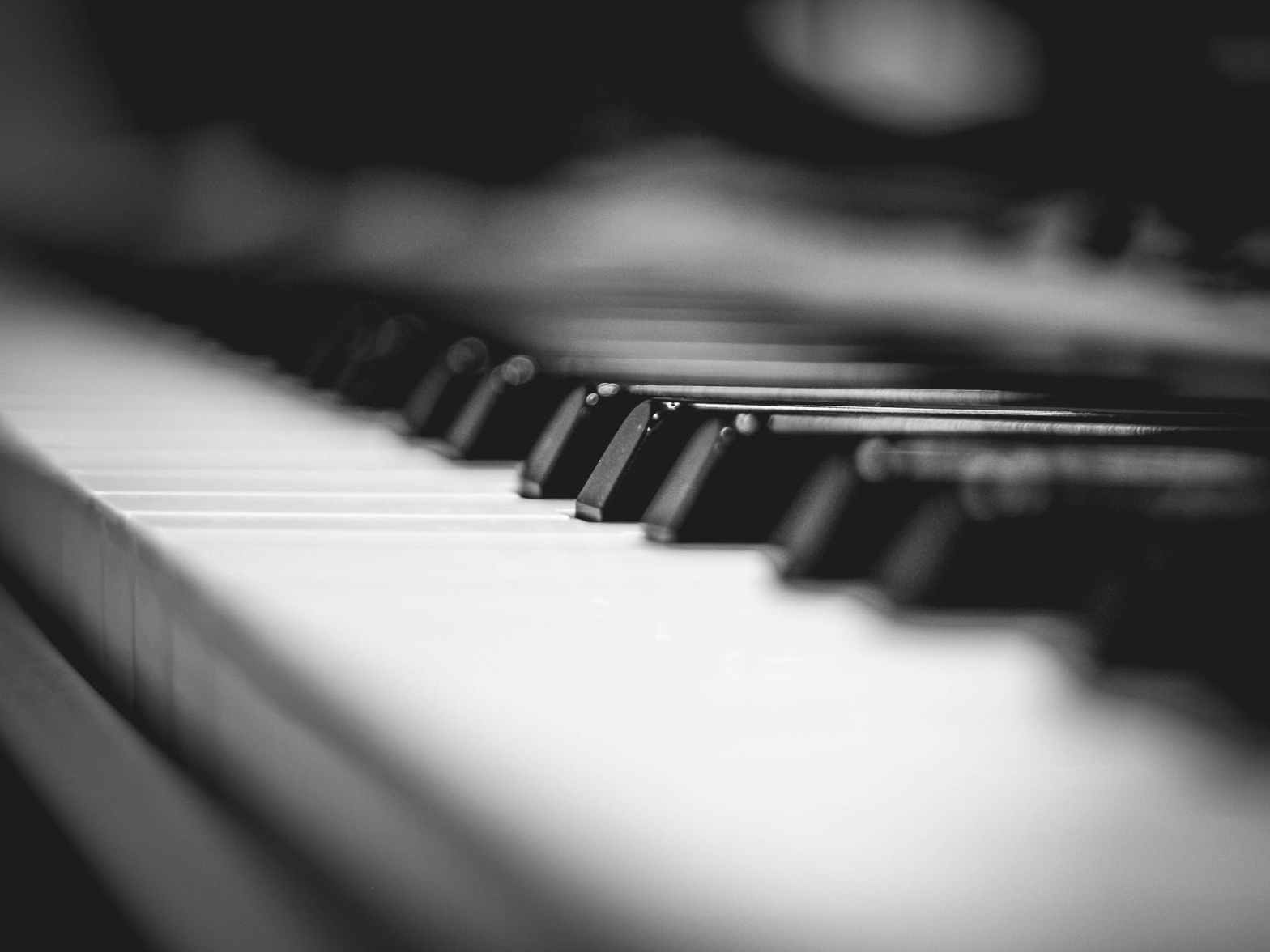
Mr Rogers tells him a list of ways of dealing with negative emotions. It’s a wide menu of options, something for everyone (all of which are preferable to charging up onto a stage during a live broadcast and smacking your antagonist across the face for all to see, poor chaps). Although I’m not averse to smashing a few plates when no one is around, I knew my preference as soon as Mr Rogers said it: “Play the lowest keys on the piano, all at the same time.” He demonstrates with an expressive gesture using his whole body.
In the closing scene, the production of an episode of Mr Rogers Neighborhood is wrapping up in the television studio, and all the (very nice) staff are moving equipment around and scurrying off. Mr Rogers sits down, alone, to his concert grand piano in the middle of all the sound kit and begins to play a gentle melody. He moves into some simple jazz, before startling us with an abrupt, loud and percussive pounding on the lowest keys. It was as if he couldn’t quite decide how he felt, but he knew that the piano keys could hold it all.
I was moved by the scene partly because it helped me appreciate the timing of an imminent ‘coming true’ of a lifetime dream. I even understood how it was to coexist with our suffering in an unpredictable mix of life’s highs and lows. I’d been waiting nearly three years for the arrival of a very special anniversary gift from my husband. He’d announced over dinner back in 2017 that he had set aside funds to buy a suitable used/restored Steinway grand piano for me, which we would search out and I would choose. I was stunned. We were in South Africa on the holiday of a lifetime, which was really the gift, I thought. As well, I had been excited to give him his gift, the pair of Hamilton tickets I’d been lucky to buy before the hit musical had even opened in London. (It was a decent gift. Comparison’s a thief.) I am my mother’s daughter: I was born wanting a Steinway, but at some point that dream had faded, appropriately, with the costs and priorities of raising a family. Frank never forgot.
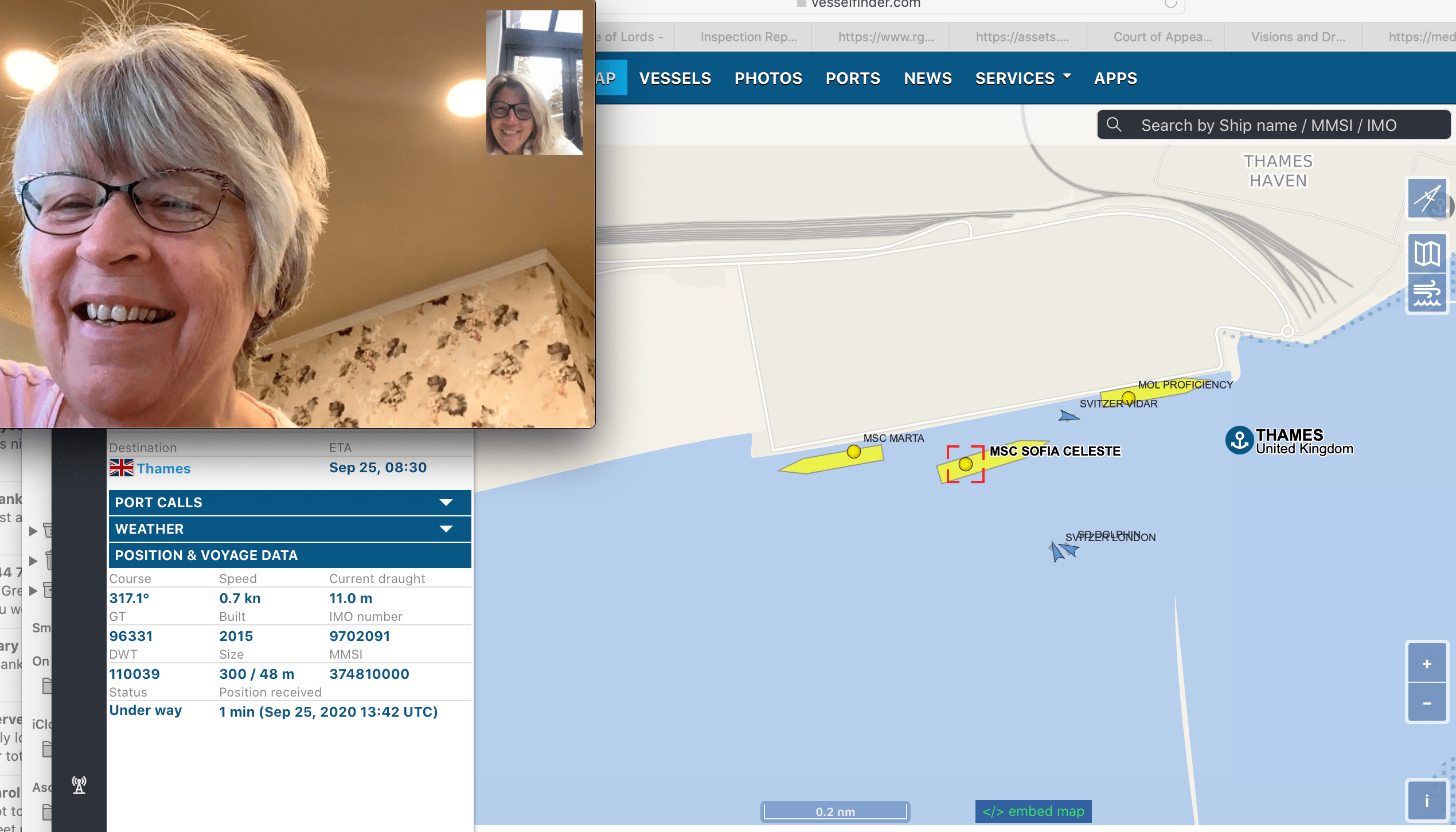
Now, in 2020, as I sat watching this unsung hero in the zipped-up cardigan teach a grown man with anger issues what he’d taught me at age four, a container ship called MSC Sofia Celeste was on its way with my newly-restored 1951 Steinway piano. It was cruising north along the west African coastline toward the Canary Islands and would eventually thread the English Channel, and up the Thames estuary to be escorted sideways to a Thames loading dock. I was tracking it daily, though the journey would take several weeks. Miss Sofia would bring me my own piano keys– and strings, and hammers, and white wool felts with purple hearts, and sound board, and pedals, all set by hand in a newly lacquered black cabinet. “Those piano keys,” I thought, “will be able to hold all feeling for me, too.” It would arrive at a time when the world was locked down in a pandemic, and 18 months after our world had been shattered by Clay’s death,
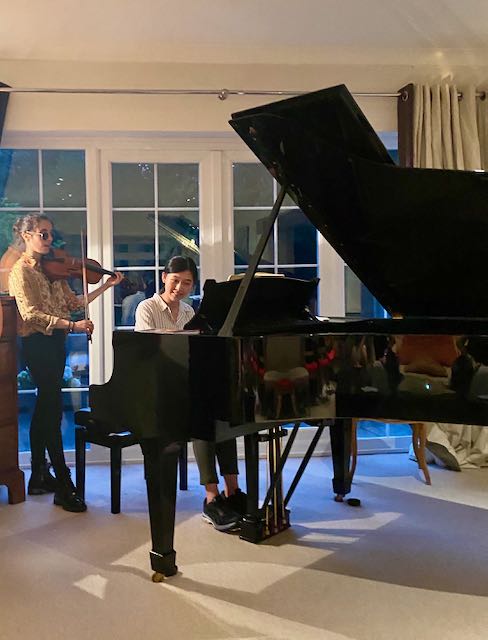
There’s a separate long and beautiful story about why it took three years, which includes a second trip to Cape Town when I would shake every hand that restored the various parts of my piano. It has been in my lounge now for more than a year, and I play it almost every day. I have one or two movements from Beethoven Sonatas under my fingers for angry days and a certain Debussy Prelude conducive to thoughtful contemplation. A friend gave me stacks of her mother’s old piano music, and it’s like I get to know her as I leaf through the music and play. In addition to Classical essentials, there are wonderfully frayed songbooks full of folk songs and national athems for sightreading. That’s been useful on days that call for distraction, along with Bach Fugues because they require my best concentration.
On the very saddest days, the times when there are words neither for expression nor consolation, I have turned to simple composing and arranging. One day a hymn popped into my head, “It is Well with My Soul.” There’s a beautiful version for wind band that we played in high schooI, and I remembered something about the words being penned by a father after he’d lost his children in a ship that sank in the Atlantic. The first verse goes
When peace, like a river, attendeth my way,
When sorrows like sea billows roll;
Whatever my lot, Thou has taught me to say,
It is well, it is well, with my soul.
This father hadn’t lost just one, but ALL of his children. Now that I was familiar with child loss, I wasn’t exactly humbled by his declarations, and I was far from being inspired. I felt, at first, almost hopeless. It seemed completely outrageous to imagine I would ever be able to say “It is well with my soul.” Yet as I thought about that, and about what he did NOT say—that he was happy, that he was content, that he was filled with joy and peace—it occurred to me that maybe the grieving father did not write these words as an expression of his felt emotion. “Thou has taught me to say,” he wrote.
I sat down at the piano that day and out came an arrangement of the hymn, recognisable enough to indicate my intention but with chords altered to say “I am not there yet. No, I’m just not there yet.” They’re interesting chords that I cannot name, major turned to minor with added sevenths here and there. I leave the chorus for another day, when my lips can sing it. I remember my son Chas, now 26, rushing into the room saying “You can’t do that,” rejecting my new harmonies outright. Eventually, he changed his mind. There have been a few other tunes landing in me on different days– not too often– inviting the same major-to-minor key change that expresses the unspeakable grief I sometimes feel in Clay’s absence.
I’ve stopped short of imposing melancholy on Pharrell Williams. Clay would have found that really annoying. Occasionally I play both parts of the simple duet I once wrote for Clay on string bass and me on piano. It sounds way better with him plucking out the bass line. Everything sounds wonderful on this instrument, though, which plays even better than I could have dreamed. Chas sits down to play as often as I do, and I like to think that Clay might have been inspired to teach himself. As for my music, each arrangement I write lifts resolvedly back to its major key by the end…. for Chas’ sake, for musical effect, and maybe for my own sense of hope.
 clay fragments
Just beautiful Gretchen 💕🎹🎶
LikeLike
No words necessary…beautifully written! Tight hugs, Teddy+
LikeLike
I am so looking forward to meeting your piano. Does your piano yet have a name? Sadly, we’ve not been able to travel there to see you because of covid but perhaps within the next year or so.
LikeLike
I can just about hear the music. I definitely hear your grief and I see you continuing the journey. I love the way you are using your art to express yourself. My sister has found a similar outlet in pottery. Sending you love ❤️
LikeLike
That was very inspiring using music as your mood changes.Very creative.That’s good, as I know you can tell
LikeLike
margblack@aol.com
LikeLike
Oh Gretchen, this is stunningly well written. I can feel with you those deep notes on the piano all played at the same time and what that means. Now the healing balm of being able to sit down to your very own Steinway thanks to Frank’s kindness and thoughtfulness. Thank you for lifting my soul this afternoon!
LikeLike
Love every word. I can feel it!! Thanks Gretchen!!
LikeLike
Just beautiful.
That is all I have to say about that.
LikeLike
So beautiful Gretchen! I can hear you playing and feel the struggle of your soul. Thank you for sharing with us. Sending you love.
LikeLike
Oh dear Gretchen. Thank you for another beautiful gift from your journey , this very special one, set to music… you continue to lift my spirits and inspire hope for all of us with hurting hearts !
LikeLike
Such a beautiful article and playing music is such good therapy. I can’t begin to comprehend the loss you have suffered but I’m sure Clay would be so proud of you keeping his memory alive in this wonderful way, Gretchen. Sending hugs xxxx
LikeLike